
Chobe vs the Okavango Delta: Two Very Different Botswana Safaris
Botswana is one of those safari destinations where two places can exist within the same country and offer experiences that feel worlds apart. Chobe and the Okavango Delta are both famous for extraordinary wildlife, beautiful landscapes and some of Africa’s finest safari camps, but the character of each safari is very different. One is shaped by a mighty river and enormous concentrations of wildlife. The other is defined by water flowing through a vast wilderness, remote camps and a feeling of being completely immersed in the landscape. For travellers deciding between the two, the question is not simply which destination has better wildlife. It is about the kind of safari you want to experience.
Okavango Delta experience on a mokoro. What a special safari experience. Elephants and buffalo seen on a boating safari on the Chobe River
Chobe: Where Wildlife Gathers Around the River
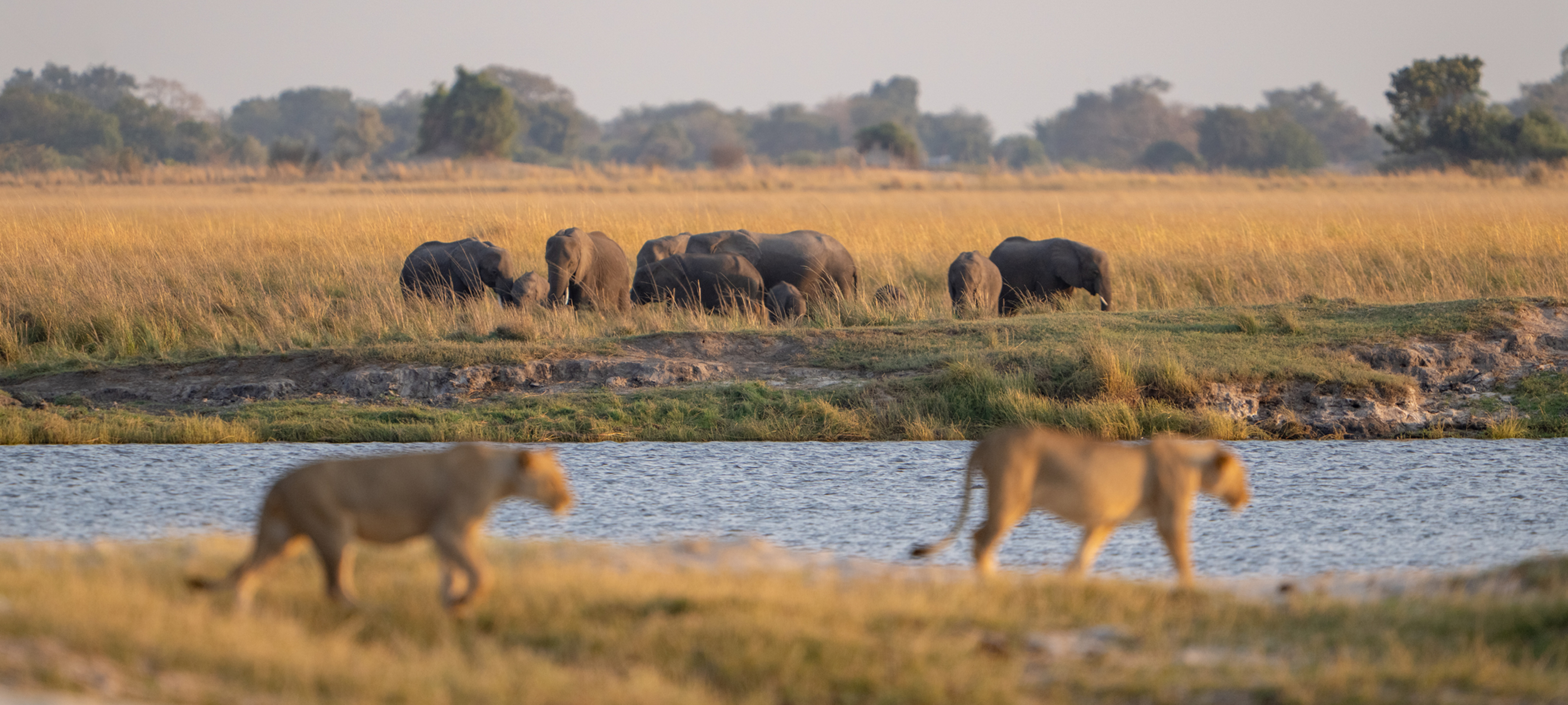
Chobe is perhaps best known for one thing above all else: elephants. The Chobe River draws enormous numbers of elephants and other wildlife towards its banks, particularly during the dry season when permanent water becomes increasingly important. Watching herds of elephants gather along the river, cross through the water or disappear into the surrounding woodland is one of the defining experiences of northern Botswana.
But Chobe is much more than elephants. The wider Chobe ecosystem encompasses a huge area of wilderness, including the Chobe Riverfront, Savuti and the Linyanti region. Depending on where you stay, your safari can therefore feel very different. The Chobe Riverfront is the most accessible and well known part of the area, and this accessibility is a major part of its appeal.
It is remarkably easy to reach. Most travellers simply fly into Kasane Airport, where their lodge or camp will generally collect them and transfer them directly to the property. There is no need for a long road journey or a small aircraft transfer into the wilderness, making Chobe particularly convenient for shorter Botswana trips or travellers combining their safari with Victoria Falls. That convenience does come with a difference in atmosphere.
The Chobe River Experience
The Chobe River is one of the great attractions of the region, and a boat safari gives you a completely different perspective from a traditional game drive. You can drift quietly past elephants standing knee deep in the water, watch hippos surfacing around the boat, photograph crocodiles lying along the banks and see huge numbers of birds concentrated around the river. But the Chobe Riverfront is not an entirely private wilderness experience.
The river is shared by multiple operators, and during busier periods it is possible to have a handful of boats on the river at the same time. You may find yourself watching a particularly good wildlife sighting alongside other boats, particularly around the areas where wildlife is most concentrated.
That does not take away from the experience. In fact, the sheer number of animals around the river can be spectacular. It simply creates a different atmosphere from the deeper reaches of the Okavango Delta, where the density of camps, vehicles and boats can be considerably lower. And this is an important distinction when comparing the two.
The Okavango Delta: Safari on the Water
The Okavango feels completely different. Rather than following a single river towards the sea, the Okavango River spreads into a vast network of channels, lagoons, floodplains and islands. Water moves through the Delta, creating an ever changing landscape where the balance between land and water shifts throughout the year.
The result is one of Africa’s most distinctive safari environments.
The Delta is not somewhere you simply drive into from the nearest town. Much of the remote Delta, particularly the inner regions, cannot be accessed by road. Instead, travellers generally fly into Maun, and sometimes Kasane depending on the itinerary, before taking a short light aircraft flight into one of the many small airstrips serving the different camps and concessions.
We work with an airline that handles these transfers for our guests, with aircraft or helicopters used depending on the itinerary and the experience we are building. That flight is part of the experience in itself.
As the aircraft leaves Maun behind, the landscape begins to change beneath you. Roads and settlements disappear, the waterways become more obvious and the vastness of the Delta starts to reveal itself.
Then you land on a tiny airstrip in the middle of the wilderness. That sense of remoteness is one of the things that makes the Okavango so special.

A Quieter Safari
The difference in density between the Chobe Riverfront and the Okavango can be immediately noticeable.
On the Chobe River, particularly during busy periods, there may be a handful of boats sharing the same stretch of water. In the Okavango, camps are spread across a huge network of waterways and private concessions, and the experience can feel considerably quieter and more secluded.
It is entirely possible to spend hours in the Delta without seeing another safari vehicle or boat.
You might be moving through a channel in a mokoro with nothing around you but papyrus, reeds and the sound of birds. You might be sitting beside a lagoon watching elephants approach the water. Or you could be deep in a private concession tracking lions through open floodplains without another vehicle anywhere nearby. That sense of space is a major part of the Okavango experience. It is not simply about seeing fewer people. It changes the way you experience the wilderness.
The Okavango Is Not One Safari
One thing that is important to understand about the Delta is that there is no single Okavango experience.
Different camps sit in different environments, on different concessions and with very different proportions of permanent water and dry land. Some areas are dominated by waterways and are particularly suited to mokoro excursions and boating. Others offer extensive dry land where traditional game drives are the focus.
In some private concessions, activities can include night drives and off road driving where permitted.
This means choosing the right camp is incredibly important. Two lodges can both be described as being in the Okavango Delta while offering completely different wildlife experiences. That is why we never look at the Delta as one generic destination when planning a safari. The specific concession, location, habitat and activities matter just as much as the name of the destination itself.
Mokoro and Boat Safaris in the Delta
One of the things that makes the Okavango Delta so versatile is the variety of ways you can experience its waterways.
The mokoro is perhaps the most iconic. A traditional dugout canoe is quietly poled through the shallow channels, allowing you to move through the reeds at an incredibly gentle pace. There is no engine noise, no rush and very little disturbance to the environment around you. Birds call from the reeds, fish move through the clear water and the smallest details suddenly become part of the safari.
But the Delta is not limited to mokoro excursions.
Depending on where you stay and the waterways surrounding your camp, motorised boat safaris can also be an important part of the experience. These allow you to travel further and cover more water, opening up a completely different way of exploring the Delta. You can cruise along larger channels, search for wildlife along the banks and spend time watching elephants, hippos, crocodiles and an extraordinary variety of birdlife from the water.
This is one of the reasons the Delta can offer such a varied safari.
One day you might be travelling quietly through a narrow channel in a mokoro, completely surrounded by reeds and water. The next, you could be heading out by motorboat across a larger stretch of the Delta, covering considerably more ground and experiencing the landscape from a different perspective. Then you can return to a traditional game drive on dry land, depending on the area and the conditions.

The exact balance between these activities depends on the camp and concession. Some areas are heavily water based, while others offer a much stronger combination of land and water activities. Chobe has its own exceptional boat experience, of course. The difference is that the Chobe River is a defined river system where multiple operators use the same stretch of water, particularly along the Riverfront. In the Delta, boating forms part of a much larger network of waterways spread across different concessions and camp areas, so the experience can often feel considerably more secluded.
That variety is one of the Delta's greatest strengths. You are not simply choosing between a vehicle and a mokoro. Depending on where you stay, the Delta can give you game drives, mokoro excursions and motorised boat safaris within the same safari, each revealing a completely different side of the wilderness.
Chobe and the Okavango for Wildlife
Both destinations can produce phenomenal wildlife encounters, but they tend to present that wildlife differently.
Chobe is famous for concentration. During the dry season, the river becomes a magnet for elephants, buffalo and other wildlife. Large herds can gather around the water, creating those big, dramatic scenes that Botswana is so famous for.
The sheer scale of these gatherings can be extraordinary. The Okavango is often more about immersion.
Rather than one enormous gathering of animals around a single river, you can find wildlife distributed throughout an incredibly diverse landscape of islands, floodplains, woodland and waterways. Elephants are still a major part of the experience, but the setting is different. You may encounter them crossing a channel, feeding beside a lagoon or moving through the floodplains. The same applies to predators.
Both areas can produce excellent sightings of lions, leopards, wild dogs, cheetahs and other predators, but the experience depends heavily on the specific area, season and conditions.
In the Delta, the combination of water, islands and open floodplains can create fascinating predator encounters, particularly in private concessions where vehicles can sometimes spend more time with a sighting and where night drives may be available. Chobe, meanwhile, offers its own extraordinary predator opportunities, particularly when travelling beyond the busiest sections of the Riverfront and into areas such as Savuti and Linyanti.
Lion pride in Chobe National Park - Safari Travel Agent
Photography in Chobe and the Delta
For photographers, the choice becomes even more interesting. Chobe offers some spectacular opportunities for large wildlife scenes. Elephant herds gathering along the river, animals entering the water and dramatic light across the riverfront can produce incredible images. The boat also provides a low perspective, which can be particularly effective for wildlife photography.
The Okavango offers a completely different visual palette. The combination of water, reflections, reeds, open floodplains and islands creates opportunities for environmental wildlife images that feel very different from traditional game drive photography. There is also something incredibly powerful about photographing an animal with the landscape around it rather than simply filling the frame with the subject.
For photographers who enjoy storytelling and showing the environment in which an animal lives, the Delta can be particularly rewarding. And because the Delta can offer game drives, mokoro excursions and motorised boat trips, you are able to approach wildlife photography from several different perspectives within one destination.
Accessibility vs Remoteness
Ultimately, one of the biggest differences between Chobe and the Okavango comes down to accessibility.
Chobe is easy. You can fly directly into Kasane Airport, be collected by your lodge and be on safari without needing another aircraft transfer. It is incredibly convenient, especially for travellers combining Botswana with Victoria Falls or those who only have a few nights available. The Okavango takes more effort.
You will generally fly into Maun and then continue by light aircraft into the Delta. The camps are remote, the airstrips are small and the logistics are more involved. But that extra journey is part of what creates the experience.
Once you are sitting beside a remote Delta lagoon with no roads, towns or buildings around you, you understand why the journey was necessary.
What About a Short Safari?
If you only have a couple of nights, Chobe can make a lot of sense. Its accessibility means you can arrive in Kasane and get onto safari quickly, making it particularly useful for travellers who are adding Botswana onto another African itinerary.
The Chobe Riverfront also gives you a very different safari experience without requiring a long stay.
For the Okavango, we generally prefer giving the destination more time.
The journey into the Delta, the remoteness of the camps and the range of activities available make it a destination that deserves time to breathe.
Four nights can give you the opportunity to experience different activities, spend time on the water and settle into the slower rhythm of the wilderness. If you have more time, even better.
Can You Do Both?
Absolutely.
In fact, combining the two can create an exceptional Botswana safari because they complement one another so well.
You can begin around Chobe, arriving through Kasane and experiencing the spectacle of the river, enormous elephant herds and boat safaris.
From there, you can fly onwards into the Okavango Delta and experience the complete change in landscape and atmosphere. Suddenly the busy riverfront gives way to remote waterways, tiny airstrips, mokoros, motorised boats and vast stretches of wilderness. Rather than choosing between two competing destinations, you experience two very different sides of Botswana.
So, Which One Should You Choose?
If your priority is accessibility, enormous concentrations of elephants, dramatic river scenes and the ability to combine your safari with Victoria Falls, Chobe is an incredibly compelling option. If your priority is remoteness, quiet waterways, mokoro excursions, motorised boat safaris, private concessions and the feeling of being completely surrounded by wilderness, the Okavango Delta offers something very different.
Neither needs to be treated as a replacement for the other. Chobe is about the river, concentration and spectacle.
The Okavango is about water, space, versatility and immersion. And perhaps that is the most important thing to understand when planning a Botswana safari. You are not simply choosing between two places on a map. You are choosing how you want to experience the wilderness.
For some travellers, that begins with elephants gathered along the Chobe River as boats drift quietly past.
For others, it begins with a tiny aircraft disappearing into the Delta before landing on a remote airstrip surrounded by nothing but wilderness. Both are Botswana. They simply tell very different stories.


Comments